
Employees
A silent drive-through, no stopping. Vehicles by plate, pedestrians by card. No briefing, no phone call.
The entire site access as a single system. A camera reads the licence plate, the system verifies the authorisation, raises the barrier and logs the passage. A driver the system doesn't recognise is processed at the kiosk.
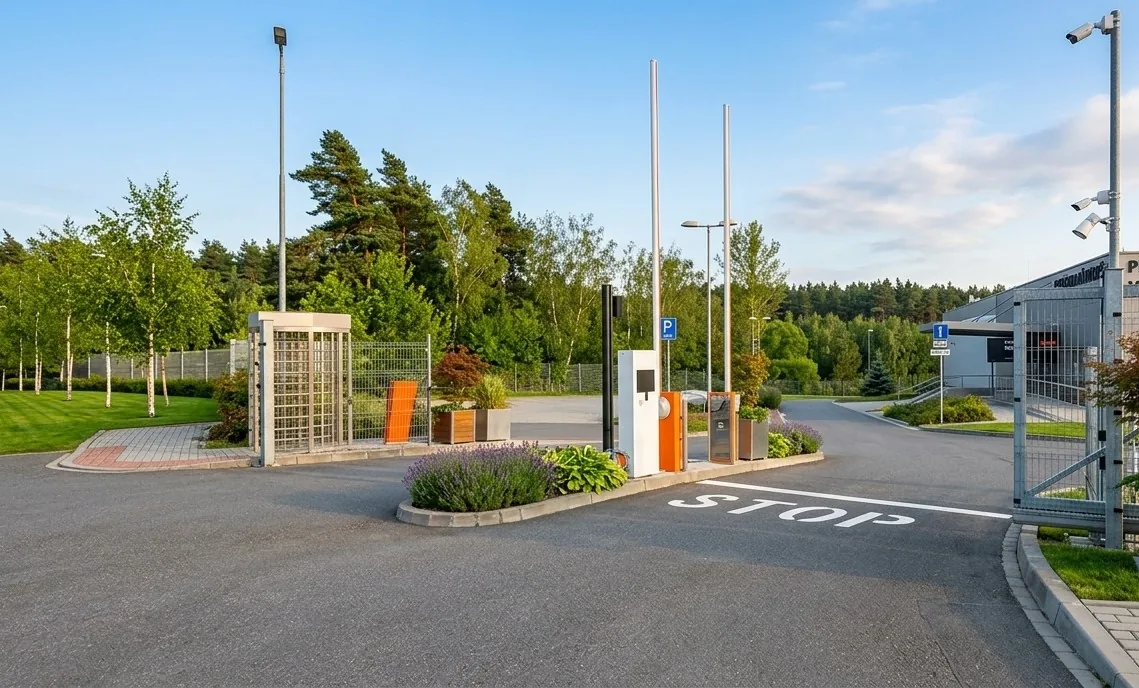
e-Vrátnice isn't a single box but a set-up that handles site access from start to finish. The difference from a standalone reception is that the elements don't just sit side by side — they're linked by the PSA control platform, which decides who may pass.
An employee drives through without stopping: a camera reads the licence plate, the system checks it against the list and the barrier goes up. A supplier without a booking stops at the kiosk, registers, completes the safety briefing and the system assigns them a loading dock. A visitor announces themselves, the kiosk calls the host and the host authorises entry.
Everything is logged. Every passage leaves a record with the time, the plate and whether it was authorised automatically or let through by an operator — and in a claim or a security incident that's the only thing you can produce as evidence.
You will meet several names for the same thing. Automated gatehouse, unmanned gatehouse and electronic gatehouse all describe one thing — an entrance handled without a person at the barrier. Likewise ANPR and LPR are two labels for automatic licence-plate recognition. What matters is something else than the name: whether one platform controls the components, or each stands alone.
The processes come pre-built as a company standard. They keep installations consistent and change only where your operation genuinely requires it.
A silent drive-through, no stopping. Vehicles by plate, pedestrians by card. No briefing, no phone call.
Individual or in groups. Registration at the kiosk, safety briefing, a call to the host and authorisation by tone dialling. Pre-registered visitors skip the call.
Choice of inbound/outbound mode, dock assignment, holding-area records and a queue on the LED panel. Slot planning is handled by the logistics module.
Service firms and tradespeople get a card with long-term authorisation, so they don't have to register again every morning.
Waste collection, regular deliveries. Pre-registered by plate, passing through without any interaction.
If several companies share a site, the outputs are branded separately and authorisations are kept apart.
The gatehouse doesn't just distinguish 'vehicle and person'. The rules differ by who arrived and why — and that's exactly what gets configured, not the technology.
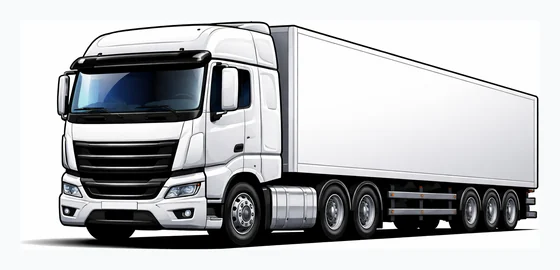
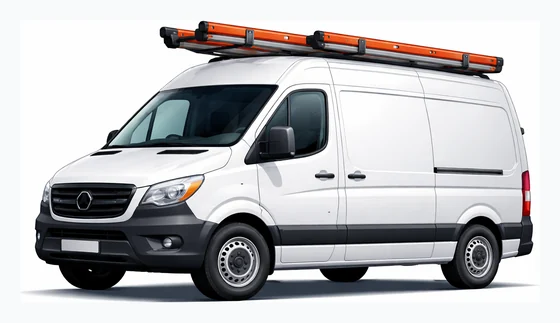
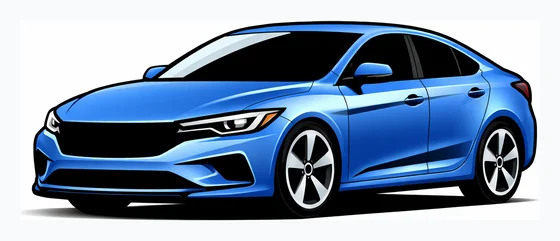



An automatic gate and barrier are more than just a drive. As standard we fit photocells and infrared sensors against trapping a vehicle or a person, monitored end positions and, on gates, a DEADMAN mode — movement runs only as long as someone holds it. The contacts are ready to connect to the fire alarm system, so that on an alarm the site opens for evacuation, and an emergency control panel for manual operation during an outage is usually included.
Into every barrier we supply a backup battery with two selectable behaviours on power loss and a mechanical release via a service key, independent of both the power supply and the control system. Even if both the power and the control computer fail, the gate can be operated safely.
We verify the function of every safety element at handover and record it in the functional test protocol. It's not a promise — it's documented paperwork that stays with the installation.
An ANPR camera is great as long as the plate is legible. When it's snow-covered, muddy or bent, a backup RFID reader on the kiosk opens the barrier — traffic keeps moving and doesn't wait for the driver to get out and wipe the plate. The cameras have infrared illumination and the reading is handled by software, so they work at night too, without added street lighting.
And where cutting into the road surface isn't an option — stone or interlocking paving, a historic site — we replace the induction loops with infrared barriers on posts. These also watch for anyone climbing over or under the barrier and trigger a warning message. The solution is chosen to suit the installation conditions, not applied across the board.
We don't just supply the technology and leave you to find a builder on your own. We handle the earthworks and construction in-house — excavations, concreting the barrier foundations, power and low-voltage cabling. You don't have to coordinate three suppliers and keep track of who's responsible for what.
If the gatehouse includes a building or a cabin, we can supply its fit-out too: air conditioning with heat recovery, security doors with panic hardware, windows with increased resistance and a security film, or a pass-through drawer for controlled card issuance without opening the door.
At sites where we measure, the share of automatically processed passages holds around 99% over the long term. The rest are snow-covered or damaged plates, unusual formats and vehicles not on record. For these cases the kiosk has an RFID reader and the system allows manual authorisation by an operator — always with a record of who opened the barrier and when.
The decision-making runs locally on an application server on site, not in the cloud. A loss of connectivity means remote management and web pre-registration stop working — passages by plate and card carry on.
Induction loops are cut into the road surface; barriers and posts need a concrete foundation. The extent of the earthworks can only be determined after a site survey, which is why we don't estimate it in advance — on comparable projects it ranged from a few thousand to hundreds of thousands, depending on whether a road had to be dug up.
Yes, provided they're in good order. The controls are connected to the PSA and the system starts managing them. For older barriers we recommend taking over a functional warranty, so it's clear who deals with a fault.
None — they are labels for the same thing. The difference that does matter lies elsewhere: whether the barrier, camera, kiosk and turnstile are linked by a single control system, or whether they are several separate devices sitting side by side. Only that link lets a vehicle be processed without staff and leave behind one traceable record.
Yes, that is the main reason it is bought. The cameras have infrared illumination and read in the dark, and the decision-making runs locally on site. A driver the system does not know is processed at the kiosk, and the call is routed to a number you choose. Staff are left with oversight and exceptions, not with opening the barrier.
Describe how things work at your site today. We'll come back with a proposed scope and a price — or start by building your specification in the configurator.